

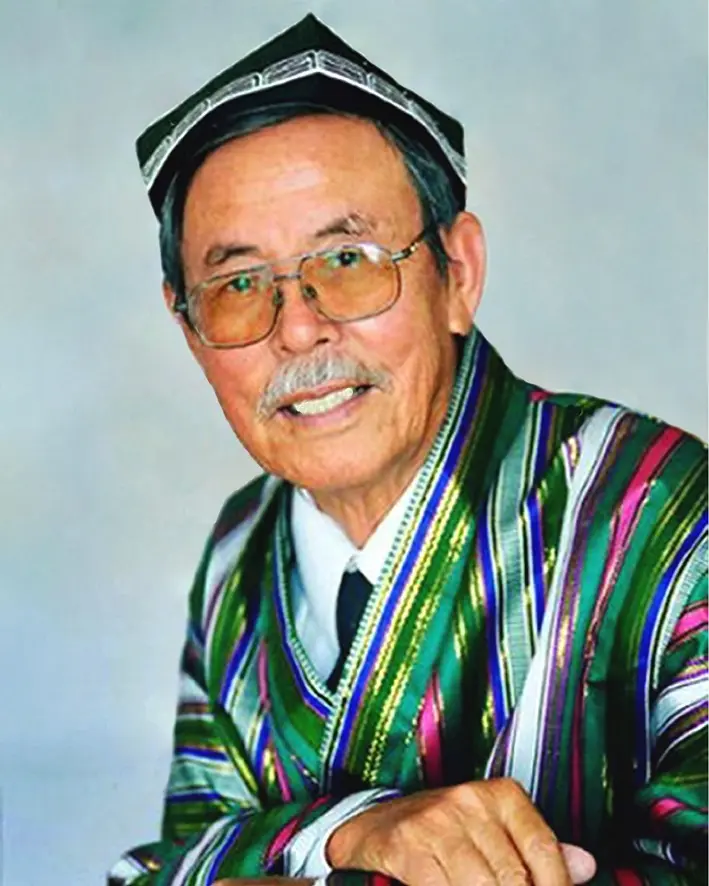
Kato Kyudzo (1922-2016)
Professor of Soka University orientalist, archaeologist and ethnographer Kato Kyudzo who lived about 95 years strongly tied his fate with Uzbekistan. Over 27 years of his life the scientist dedicated in studying the archaeological sites of Buddhist culture of the Kushan period in Surkhandarya region.
For the first time the scientist visited Uzbekistan as a simple tourist in 1963. This journey to our country left unforgettable impressions and admiration in the heart of a professor who later started studying our history. His interest to our ancient history and culture brought him to start joining archaeological expeditions and do scientific researches here.
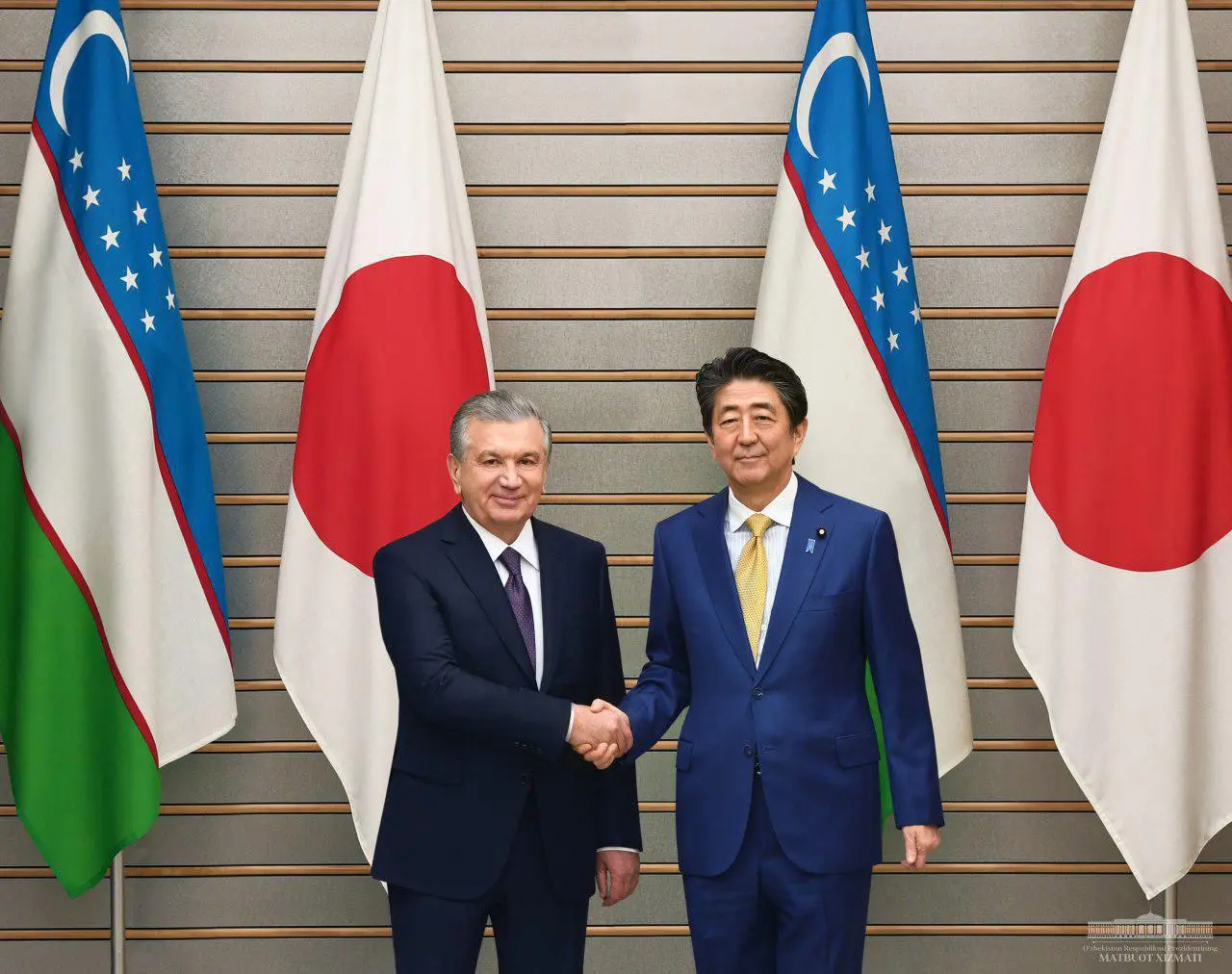
30 years of Uzbek-Japan diplomatic relations
Japan is one of the first countries to recognize the independence of Uzbekistan and establish diplomatic relations with it. The common ties between our nations , which have ancient and rich history and a unique culture, go back to ancient times. Not only trade, but also cultures and religious beliefs spread from east to west through the Great Silk Road through Central Asia, particularly Uzbekistan.
Kato Kyudzo-one of the leading historians of Japan to perform Uzbek culture to the people of “Country of the rising sun”
In 1987 the professor of Osaka university organized a special circle for those who were interested in studying the “Role of the Great Silk Road in the life of Central Asia”.
For sure , the main goal from this was not only studying the science and the history of trade through the Great Silk Road but also as a beloved patriot of his motherland Kato Kyudzo willed to research the relationship of such global phenomenon in the history of humanity with Japan.
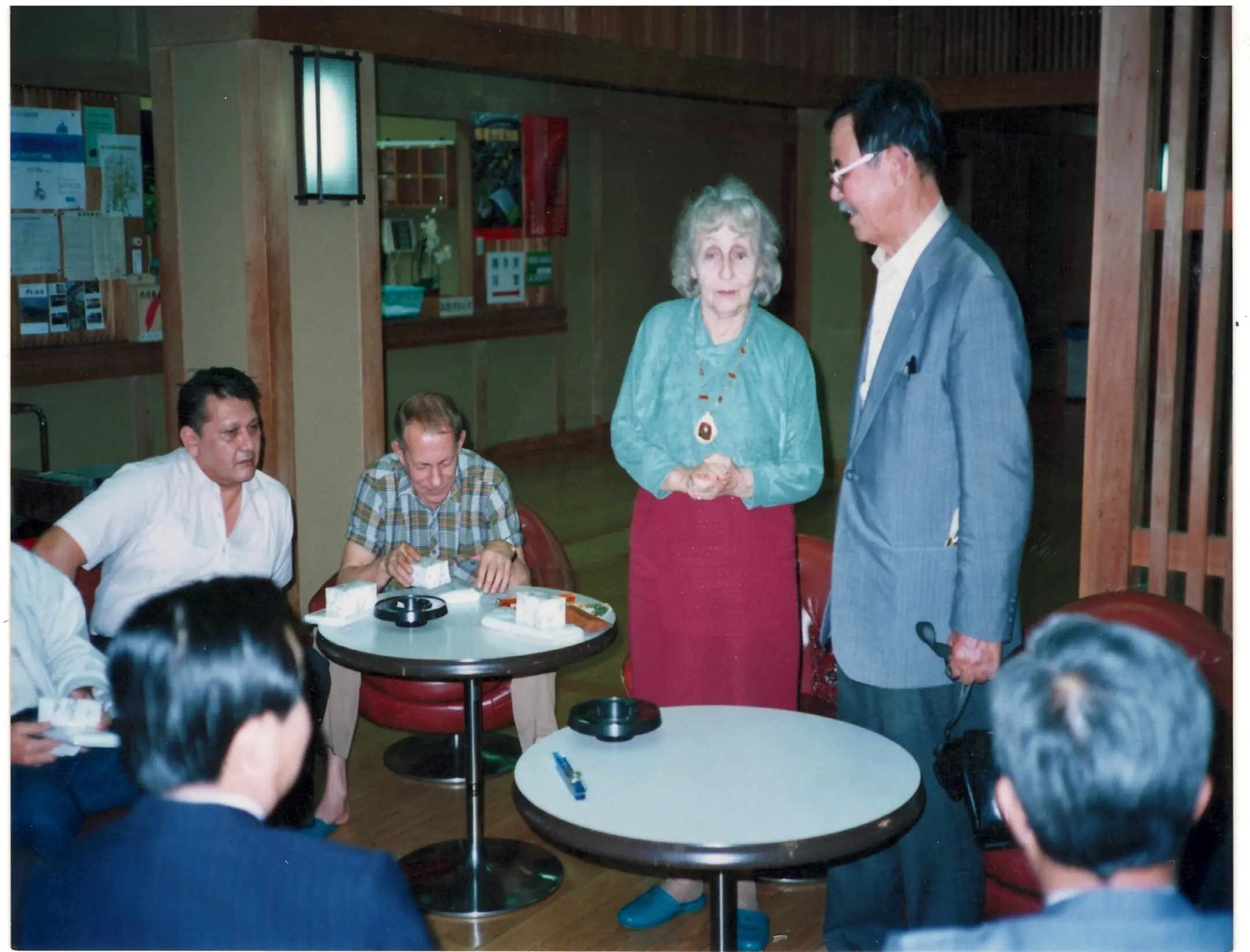
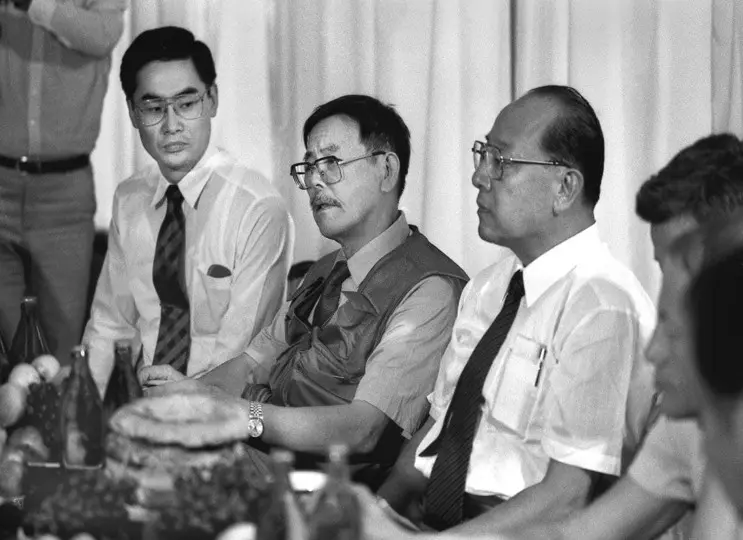
Dr.Kato Kyudzo was one of the first Japanese scientists to involve Japanese expeditions in researches to Uzbekistan.
Professor tried to give an emphasis on proving the continuos communication between the “Land of the rising sun” and the Great Silk Road. This case was the vivid proof of which ancient history and culture the modern Japan owned in the past representing it as one of the cradles of world culture. This resulted the initiative of a number of scientists with the membership of.
The biggest and unique exhibition in the history of Japan
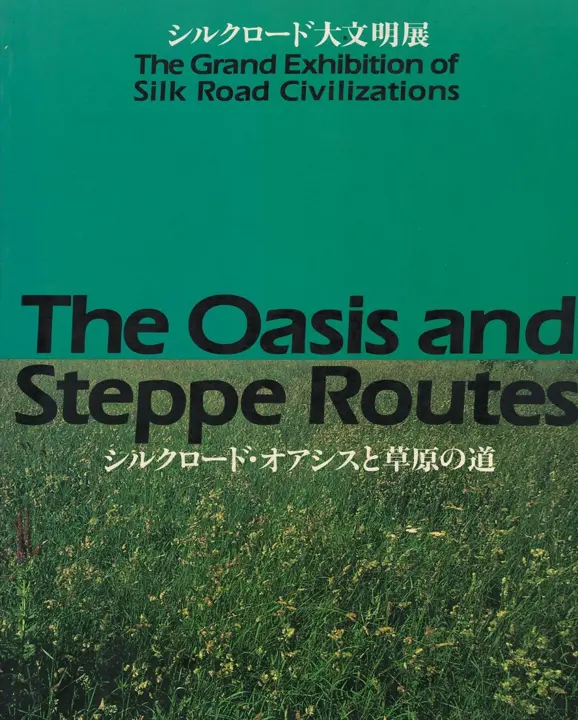
Kato Kyudzo to organize an international exhibition called “Great Silk Road leads to Nara” in 1988.
Almost twelve different countries participated in such historical event.
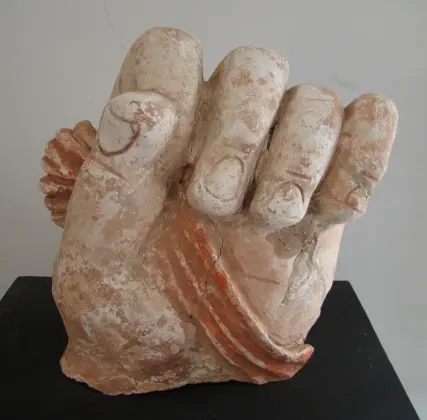
Nara international exhibition was a memorable event also in the cultural life of Uzbekistan , as three unique pieces of Buddha statues from Dalvarzintepa archaeological site were displayed there for six months.
This exhibition was the basis and good opportunity for the formation of Uzbek-Japanese scientific cooperation.
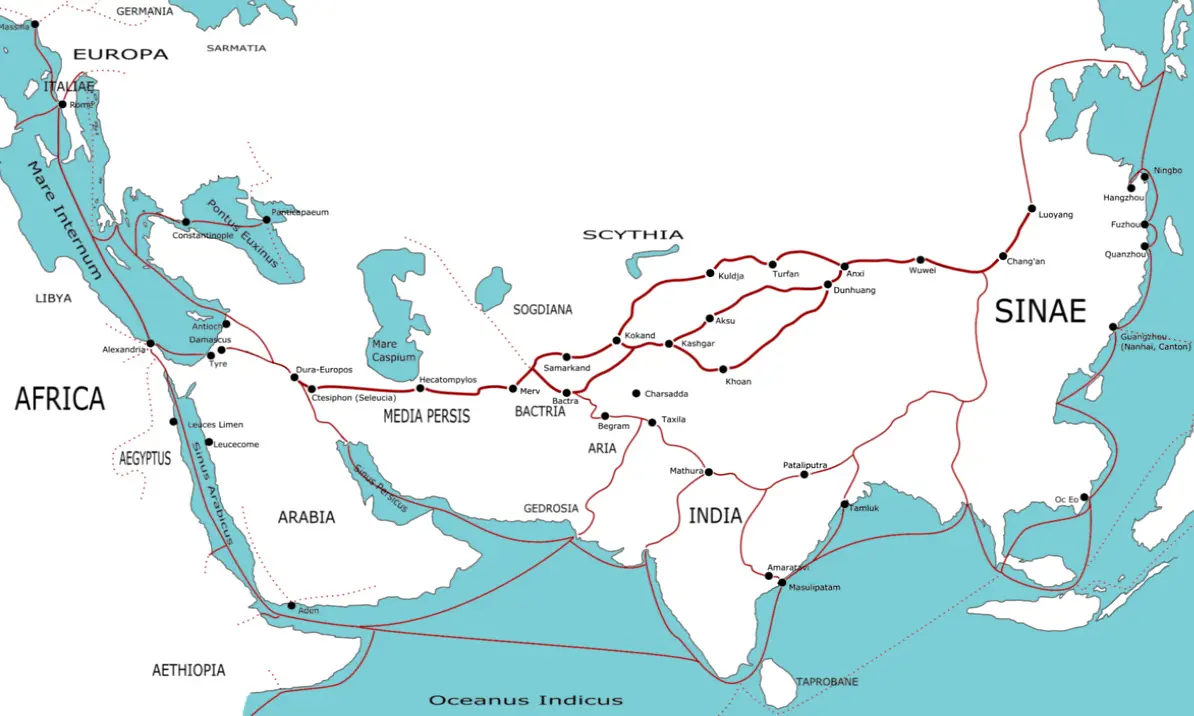


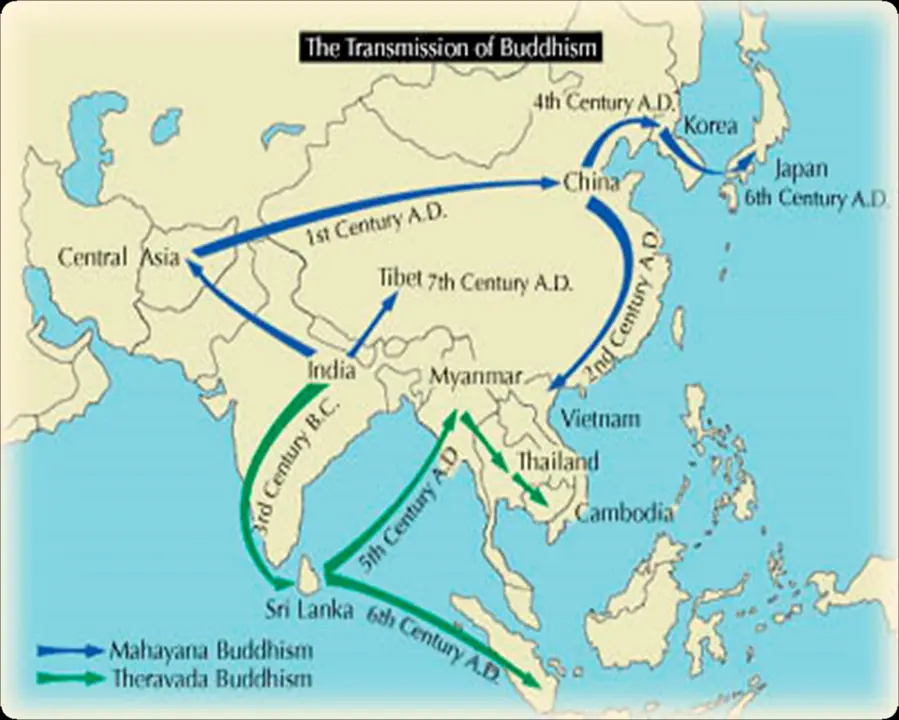
Tarmitha-Termez was one of the transformers of Buddhism to Far East
Sogdian and Bactrian merchants, who are our ancestors, played an important role in the spread of Buddhism to Japan. Therefore, the Japanese respect the history and ancient culture of our country and try to study it. One of the initiators of this work was a Japanese scientist, Professor Kato Kyuzo.
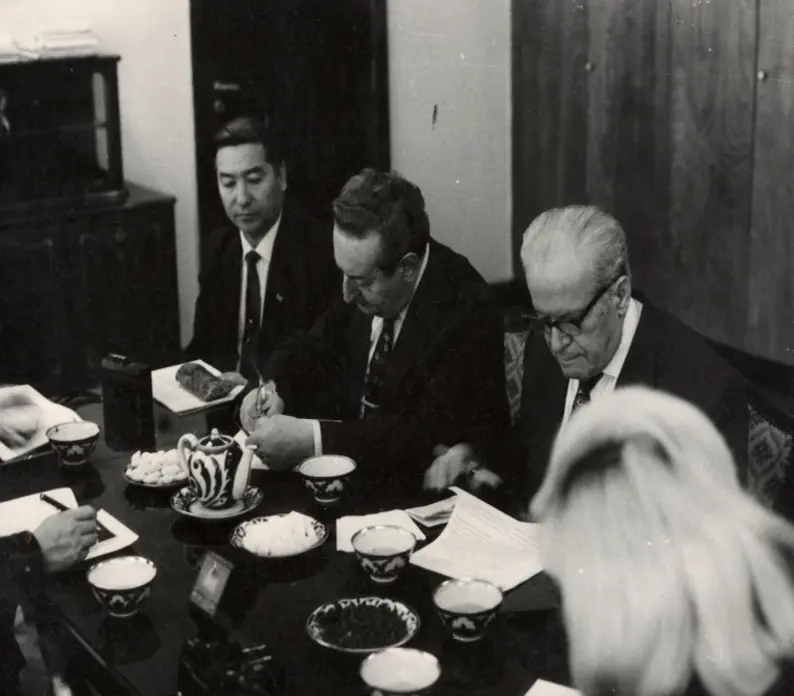
Signing a contract of mutual scientific cooperation between Art History Institute and Soka University in 1989
Very soon such visits were regularly organized causing the fulfilling of wide range of cooperative researches.
In august of 1988 eight Japanese scientists with the leadership of Kato Kyudzo visited Uzbekistan
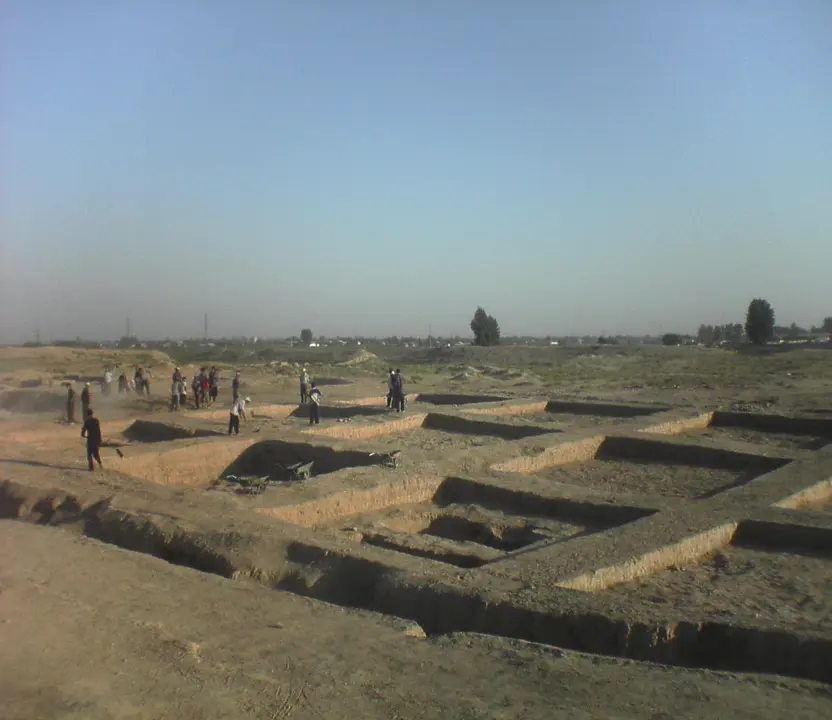
From 1990 joint Uzbek-Japanese international scientific expedition started its research works in Dalvarzintepa archaeological monument of Kushan period. Invaluable assistance in the activity of these expeditions was done by the Archaeological Institute and Art History Institutes of the Academy of Sciences of the Republic of Uzbekistan.
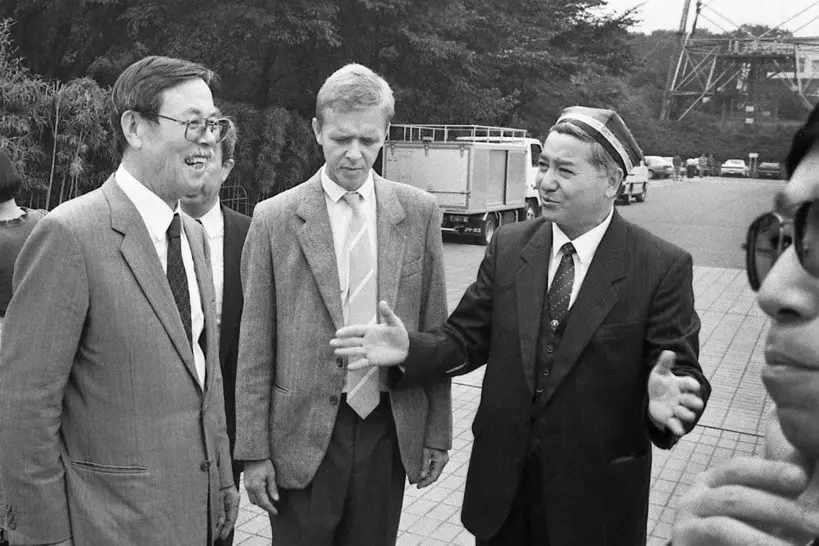


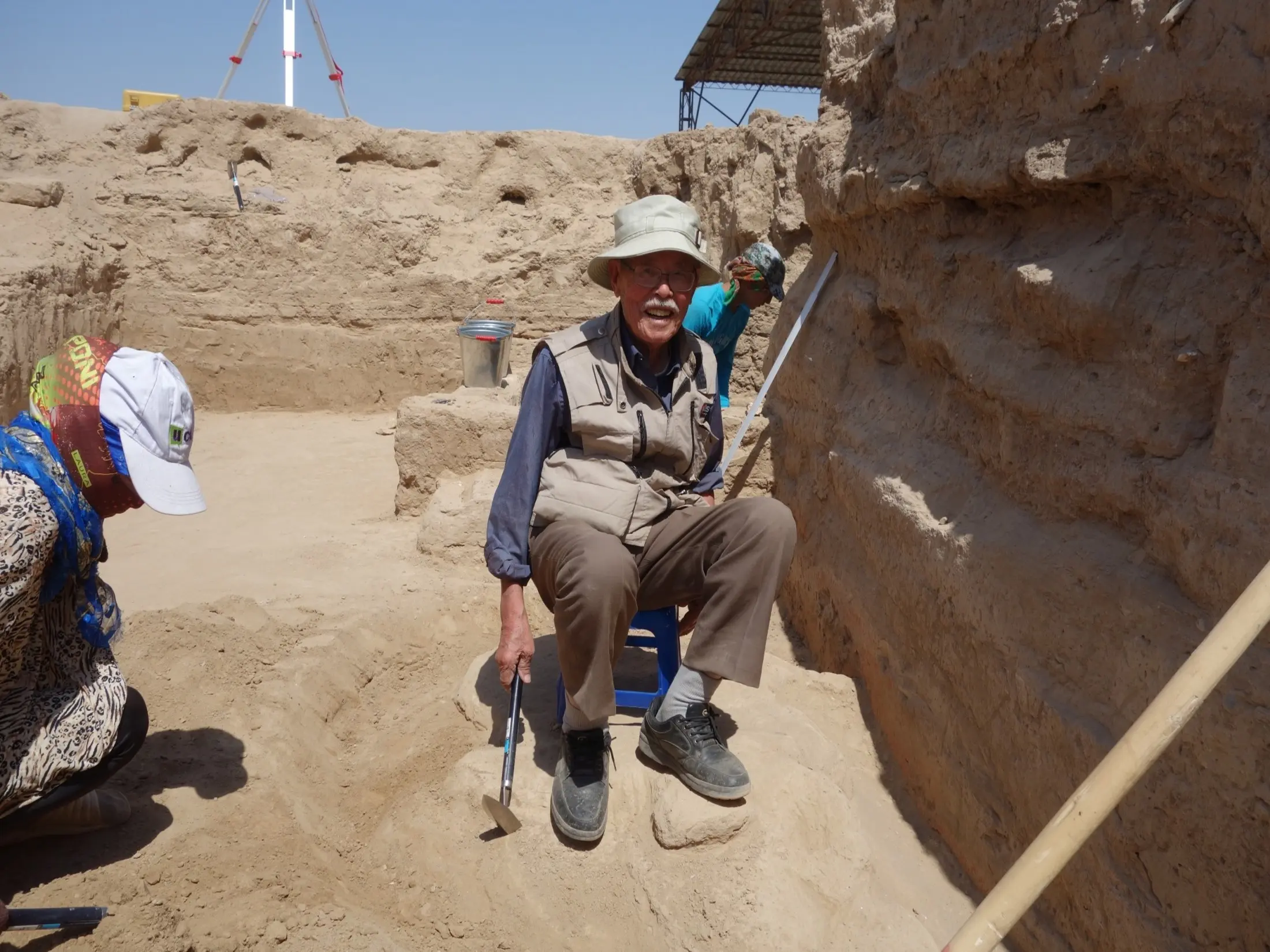
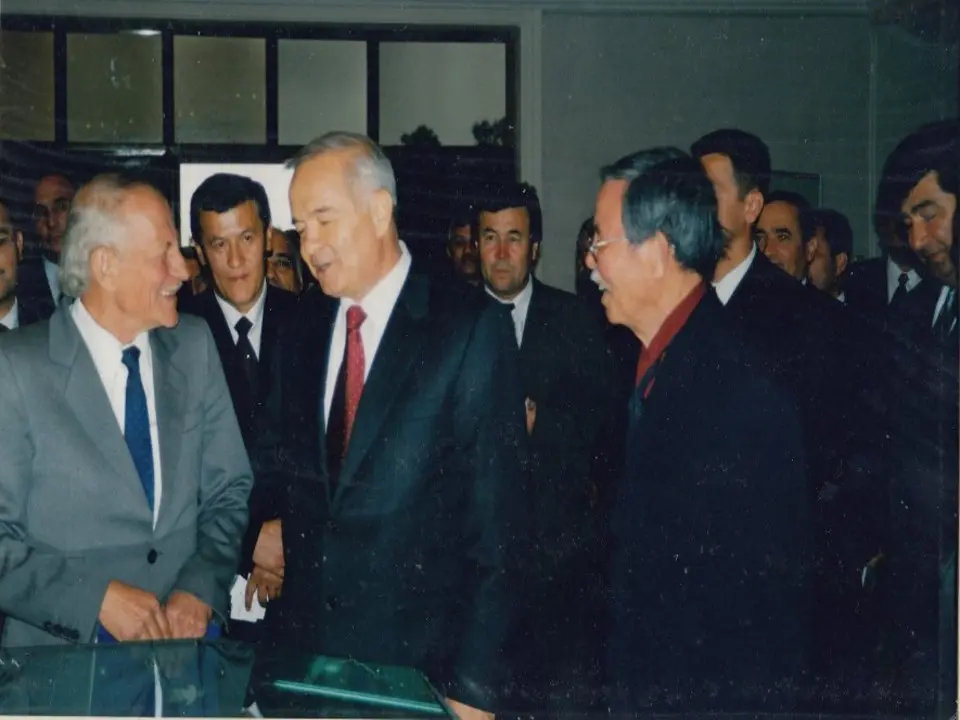
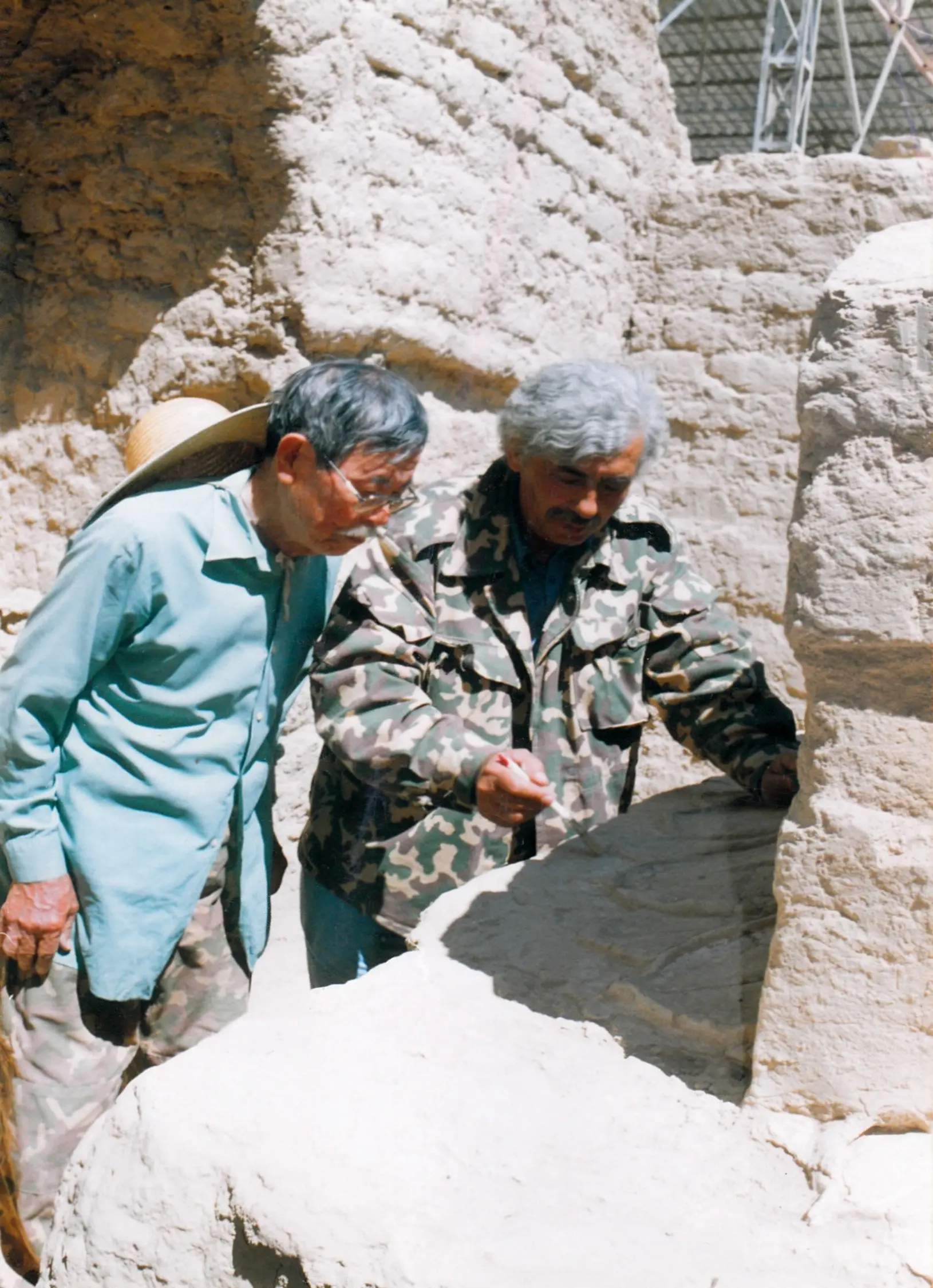
Kato Kyudzo- the first Japanese scientist to work in Old Termez-Karatepa Buddhist complex
Thus, the activity of Kato Kyudzo as an acraheologist started from excavations in Dalvarzintepa archaeological site in Shurchi District of Surkhandarya Province.
During six years 1989-1994 he actively participated in the scientific research excavations of Dalvarzintepa.
From 1997 the professor started his scientific research works in the ruins of Old Termez and Karatepa Buddhist Monastery complex.
Friendship between Uzbek and Japanese scientists is eternal
As a continuation of his scientific activities , from 2000 until 2016 (year of his death) the professor Kato Kyudzo organized and fulfilled joint scientific research excavations with the Institute of Art History in Karatepa (Old Termez), Dalvarzintepa, Karabaghtepa and Khalchayan archaeological monuments of Surkhandarya region..
From Uzbek side prominent archaeologists like Sh.R.Pidayev and B.A.Turghunov led the acrhaeological expeditions and actively participated in them.
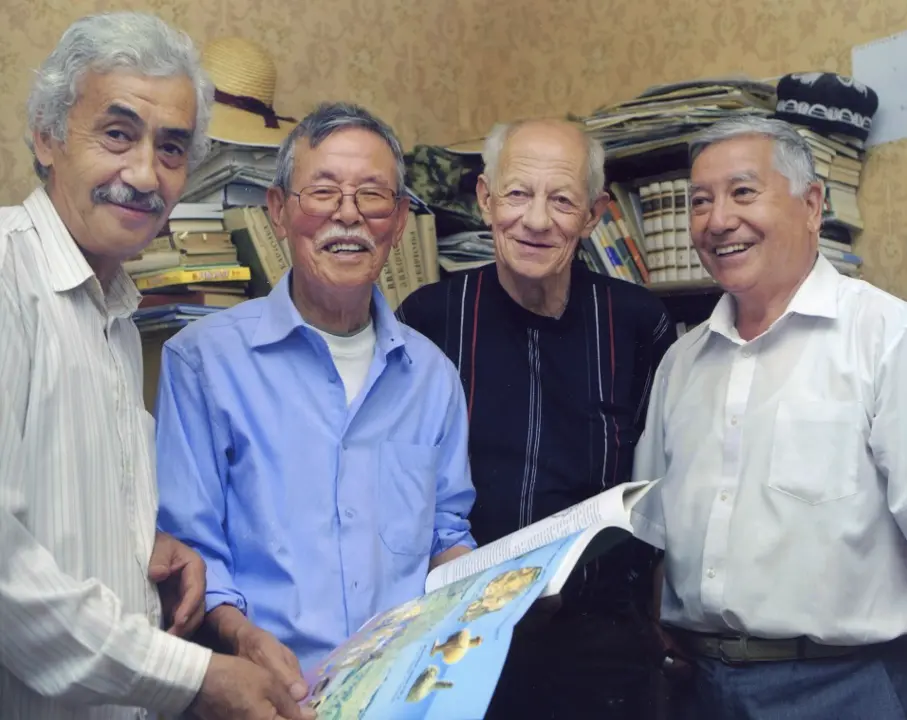
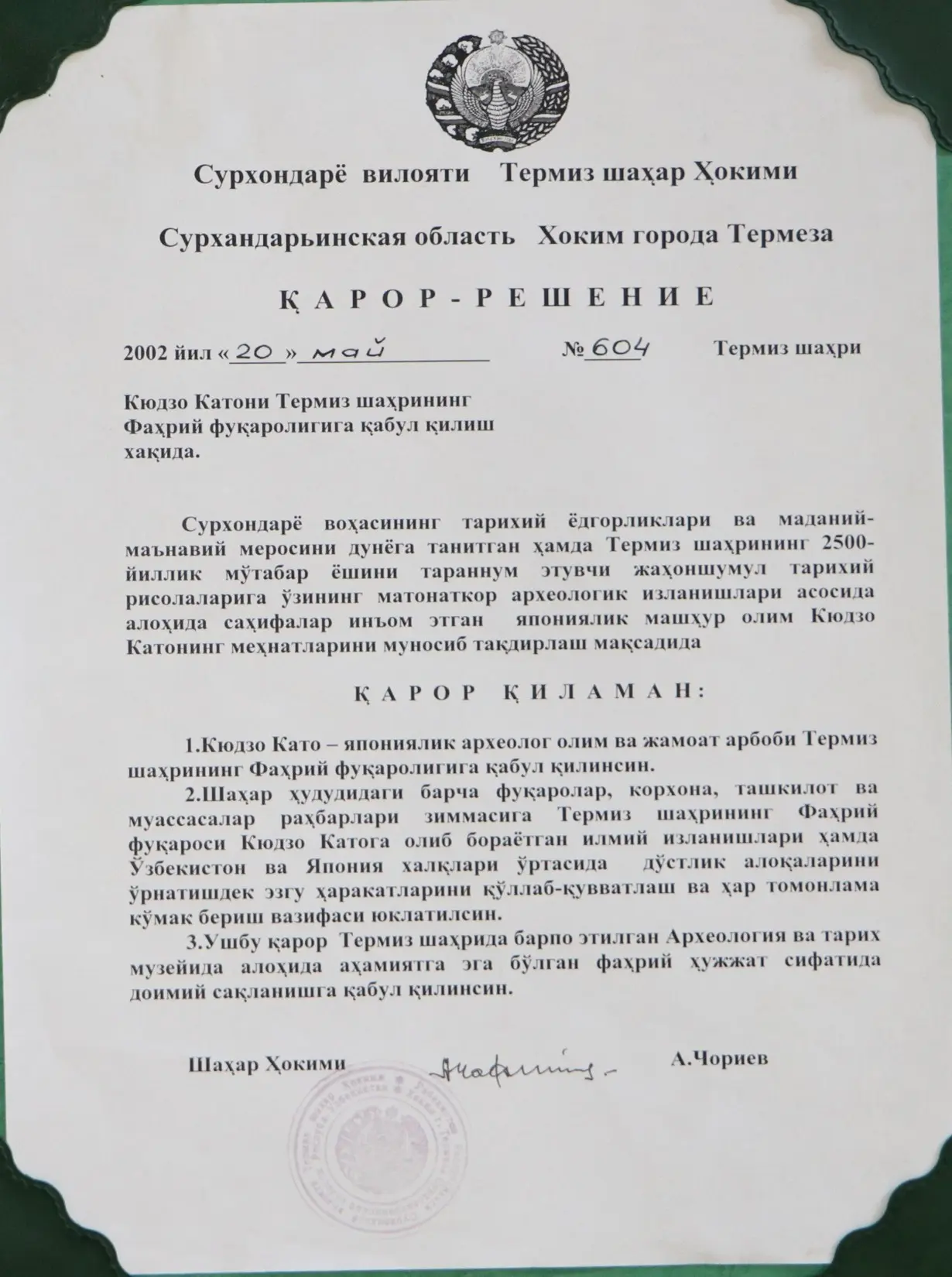
Professor Kato Kyudzo is a honorable citizen of Termez
The owner of “Friendship” medal professor Kato Kyudzo was officially accepted as a honorable citizen of Termez city on May 20, 2002 by the decree N604 of the mayor of Termez city A. Choriyev
for his great and invaluable contribution to the scientific study of historical monuments and promoting the cultural, spiritual heritage of Surkhandarya region throughout the world.